
Karimunjawa National Park: A Captivating Tropical Paradise in North Java

Located in the Java Sea, approximately 83 kilometers from the northern coast of Jepara, Karimunjawa Island is one of Indonesia's exotic marine tourism destinations. Known as the "Caribbean of Java," this archipelago offers the charm of white sandy beaches, crystal clear waters, and diverse marine life. Karimunjawa is a perfect destination for snorkeling and diving enthusiasts, and those seeking to experience the beauty of pristine tropical nature. Karimunjawa consists of 27 small islands, of which only a few are inhabited, while most are uninhabited, surrounded by crystal clear waters. This makes Karimunjawa a favorite destination for snorkeling, diving, and enjoying the beauty of the beaches. Karimunjawa has been designated a National Park by the Jepara government since March 15, 2001. Karimunjawa is home to coral reefs, mangroves, coastal forests, and nearly 400 species of marine life, including 242 species of ornamental fish. Wonderful Indonesia: Some of the rare fauna...

Habema, Papua's Beautiful Lake Above the Clouds

I had traveled a winding road full of sharp pebbles and steep climbs. The blue sky and rolling white clouds accompanied every step I took. The cold air combined with the warmth of the sun encouraged me to reach that great point, a source of life in the high peaks of Papua.
Habema, Papua's Beautiful Lake Above the Clouds

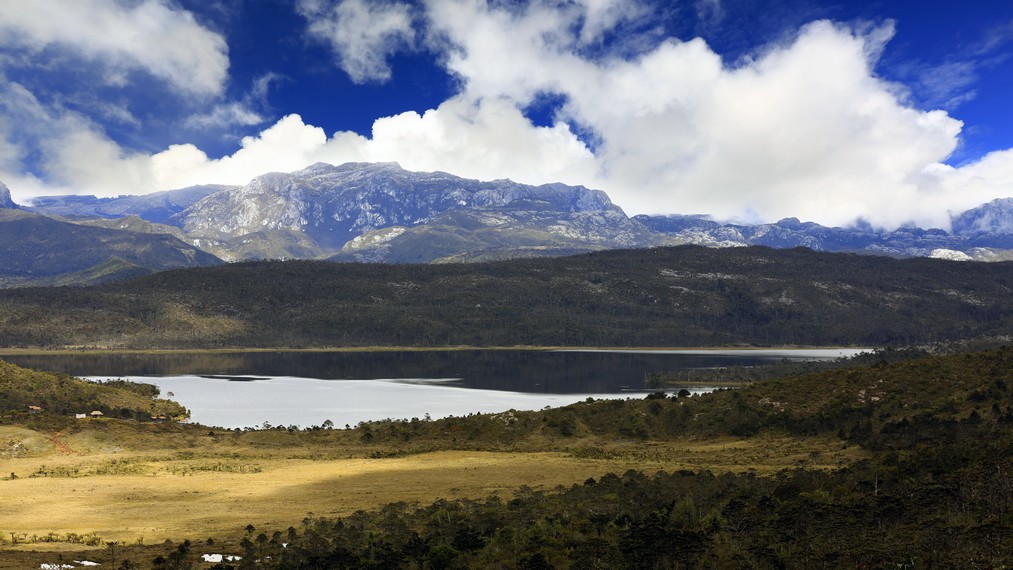
That's roughly the description of the journey that will be passed when heading to Habema. A lake that is considered sacred and a source of fertility and life by the surrounding Dani people. Not only is the lake superior in mystical terms, but it is also superior in many ways. With an altitude of approximately 3,225 meters above sea level, it is no wonder that this lake is sovereign as one of the highest lakes in Indonesia.

The original name of Lake Habema is actually yuginopa, while the name Habema was taken from the name of a Dutch officer, namely Lieutenant Habema who participated in escorting the expedition team to the top of Trikora in 1909. The lake area is approximately 224.35 hectares with a circumference of 9.79 kilometers and is in the Lorentz Papua National Park area.

Located about 48 kilometers from Wamena City, getting to Lake Habema is not an easy matter. The steep road, as well as the hilly contours of the land make anyone who wants to reach the lake need a vehicle with 4-wheel drive. Maybe if the road is flat, using a car, 48 kilometers will be reached in a relatively short time, about 1.5 to 2 hours. However, because the natural conditions are quite extreme, getting to Habema by car can take up to 3 hours.

The length of time traveled will not be felt if we enjoy every view that is passed during the trip. The expanse of hills with tall trees and cool air will spoil the eyes along the way. Especially, if we leave early in the morning and get the opportunity to enjoy the sunrise between the beautiful mountains. A rare and memorable sight.
Habema, Papua's Beautiful Lake Above the Clouds

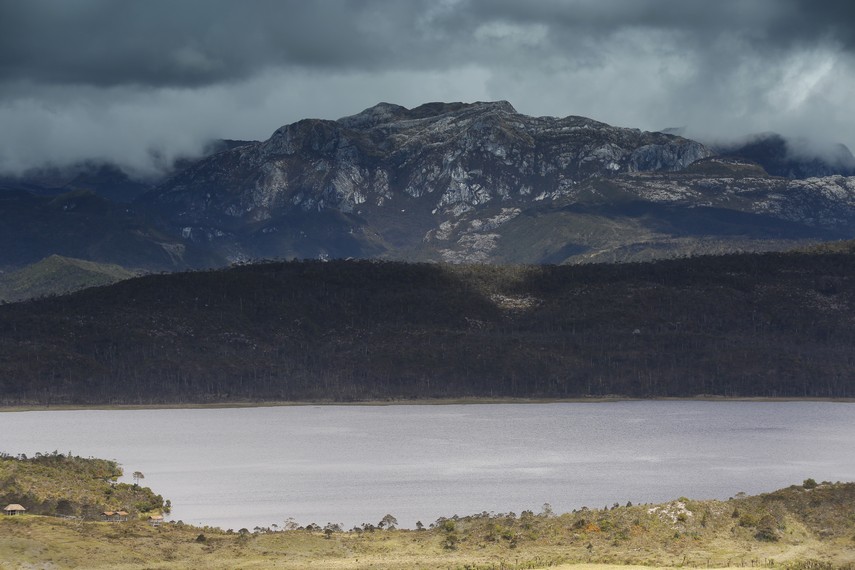
Tiredness during the trip will pay off when you arrive at Habema. The scenery is so beautiful, majestic, and very mesmerizing will welcome us. The expanse of grasslands around the lake and endemic Papuan plants such as ant houses or black orchids will make us grateful to be part of the beautiful nature of Papua. If we are lucky, we can also meet various types of Papuan birds, such as birds of paradise, or at least we can enjoy their chirping.

As far as the eye can see, the mountainous landscape will be the main menu, until our eyes are drawn to a vast lake set against a beautiful snowy mountain. For a moment we will be silent and realize that this is Lake Habema. It's as beautiful as a painting, especially since the lake is set against the towering Mount Trikora (formerly Puncak Wilhelmina) with equatorial snow at its peak. This panorama will make us feel as if we are not in Indonesia.

This sense of awe is very natural to feel, given the natural conditions around Lake Habema which are truly different from the natural conditions of Indonesia in general. Air temperatures that reach 0 degrees at night and 10 degrees during the day, vast expanses of grasslands, very unique types of mountain plants, a quiet environment, to the snow that is clearly visible at the top of Trikora make Habema special compared to other mountainous areas in the archipelago.

Comments

Popular posts from this blog

Sulamadaha Beach, a Beautiful Oasis on the Edge of Ternate Island

A stretch of blackish sand in the shape of the letter U stretches across the panoramic view of the distant Hiri Island on the other side. The waves of the sea compete to create this beautiful beach. A beautiful oasis on the outskirts of Ternate that continues to grow and spread its wings. The coastal wind blows soothingly on the hot sun of North Maluku. Birdsong sounded low among the trees that shaded my presence at that time on Sulamadaha Beach. Sulamadaha is the most famous beach in Ternate. Not only in Indonesia but this beach is also known by foreigners. Many foreign tourists visit Sulamadaha, and they find it hard to forget the charm of this beautiful beach. Sulamadaha Beach is one of the most important tourism assets of Ternate, North Maluku. The beauty of Sulamadaha Beach can be proven from the first time you enter the area. Motorized vehicles can park in one place and visitors have to walk a little to the beach area. First entering, visitors will be greeted by many kiosks selli...

Adityawarman Museum, A Trace of West Sumatra's Cultural Heritage

In addition to its natural and culinary attractions, West Sumatra also has several educational and cultural attractions that are also worth visiting. Of the many educational attractions, the Adityawarman Museum is the main reference that you must visit. This museum is one of the most important museums that highlights the history of the Minangkabau people and their cultural heritage from prehistoric times to the modern era. Here we can get to know the various knick-knacks of the life of the Minang people from the collections they have. Adityawarman Museum is located at Jalan Diponegoro No. 10, Belakang Tangsi Village, Padang Barat Subdistrict, Padang City. Standing in the middle of 2.6 hectares of land, the museum with a building area of around 2,855 square meters was built by taking architectural inspiration from bagonjong houses or Gadang houses which are characteristic of traditional Minangkabau architectural styles. The bagonjong house itself is a house on stilts with a roof that mi...

Arjuna Temple Complex, the Largest Temple Complex in Dieng, Banjarnegara, Central Java

The Dieng Plateau has a very large temple area. It is estimated that the temples in this area occupy an area of 90 hectares and only a small part of the temples have been restored. Of the many temples on the Dieng Plateau, the Arjuna Temple Complex is the most extensive temple area. Located in Dieng Kulon Village, Batur District, Banjarnegara Regency, the Arjuna Temple Complex has an area of about 1 hectare. In this complex, there are five temple buildings, namely Arjuna Temple, Semar Temple, Srikandi Temple, Puntadewa Temple, and Sembadra Temple. Apart from Semar Temple, the other four temples are the main temples used as places of worship. Judging from the shape and ornaments found in each temple, the four temples are thought to have been built at different times. Arjuna Temple was built the earliest, while Sembadra Temple was built the latest. This estimation is based on the difference in temple building styles. Arjuna Temple is still very thick with the style of temples from India....